
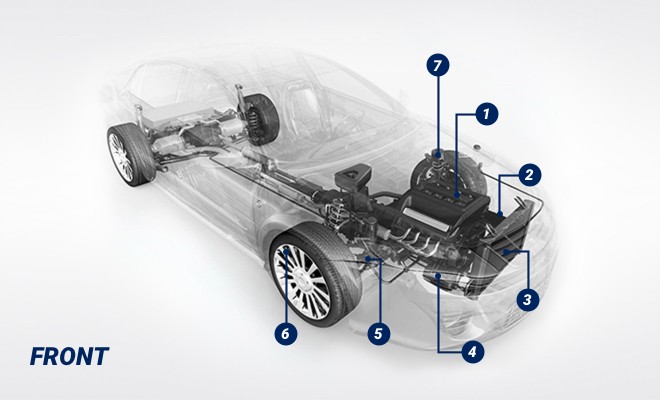
Cars are intricate machines that rely on a complex network of parts, each designed for a specific purpose. From the powerful engine that drives the vehicle to the tires that connect it to the road, every component plays an important role in ensuring the vehicle runs smoothly, efficiently, and safely. In this article, we will explore the key 香港汽車零件 , their functions, and why they are integral to the car's operation.
1. The Engine: The Power Generator
The engine is often referred to as the heart of the car, and for good reason. It generates the power required to move the vehicle by burning fuel and converting it into mechanical energy. The engine is made up of several crucial components working together.
- Cylinder Block: This is the main body of the engine, where cylinders are located, and combustion takes place.
- Pistons: The pistons move up and down inside the cylinders, driven by the force of the combustion process. This motion is converted into rotational energy.
- Camshaft: The camshaft controls the opening and closing of the engine's valves, ensuring that the right amount of air and fuel enters the combustion chamber.
- Crankshaft: The crankshaft converts the motion from the pistons into rotational energy that drives the wheels.
- Timing Belt: This component ensures that the camshaft and crankshaft work together in sync, enabling the engine to function smoothly.
2. Transmission: The Gear Shifter
The transmission system is responsible for transferring the engine’s power to the wheels, allowing the vehicle to change speeds and handle different driving conditions. It plays a pivotal role in the smooth operation of the vehicle.
- Manual Transmission: In a manual transmission system, the driver shifts gears manually, providing greater control over the vehicle's speed and power.
- Automatic Transmission: An automatic transmission shifts gears without the need for the driver to engage a clutch. It adjusts the vehicle’s speed automatically, making driving more convenient.
- Continuously Variable Transmission (CVT): Unlike traditional gear-based transmissions, CVTs provide an infinite number of gear ratios for a smoother and more fuel-efficient ride.
3. Battery: Powering the Electrical System
The battery in a car provides the electrical energy needed to start the engine and power various systems, such as lights, air conditioning, and the radio. It stores energy chemically and releases it as electrical power when needed.
- Lead-Acid Battery: The most commonly used battery, it relies on lead plates and sulfuric acid to generate electricity.
- Lithium-Ion Battery: Found in electric vehicles, lithium-ion batteries offer improved performance, longevity, and charging speed compared to lead-acid batteries.
4. Suspension System: Smooth Ride and Stability
The suspension system is crucial for maintaining a smooth ride by absorbing road shocks and vibrations. It also helps keep the car stable and improves handling when cornering or driving on uneven surfaces.
- Shock Absorbers: These parts control the movement of the suspension springs and dampen the effect of road bumps, ensuring a smooth ride.
- Springs: Springs bear the vehicle's weight and absorb shocks from the road, enhancing comfort.
- Struts: Struts combine the functions of springs and shock absorbers, providing more support and stability to the suspension system.
5. Braking System: Stopping Power
The braking system is a critical safety feature that allows the driver to slow down or stop the vehicle. A failure in the braking system could result in a dangerous situation, making it essential to ensure the system is in good condition.
- Disc Brakes: These brakes use friction to slow down the car by pressing brake pads against a rotating disc.
- Drum Brakes: A less common brake type, drum brakes use brake shoes that press against the inside of a drum to create friction and slow the vehicle.
- Anti-lock Braking System (ABS): ABS helps prevent wheel lock-up during hard braking, allowing the driver to maintain steering control and avoid skidding.
6. Cooling System: Preventing Overheating
The cooling system helps regulate the engine temperature, ensuring that the engine doesn't overheat while operating. If the engine gets too hot, it can suffer damage, so the cooling system is essential for longevity.
- Radiator: The radiator cools the heated coolant that circulates through the engine, helping to regulate the temperature.
- Coolant: This liquid mixture of water and antifreeze circulates through the engine and radiator, absorbing and transferring heat away from the engine.
- Thermostat: The thermostat controls the flow of coolant, maintaining an optimal engine temperature.
7. Exhaust System: Emissions Control
The exhaust system directs harmful gases produced by the engine out of the vehicle while reducing emissions and noise. It plays a vital role in minimizing pollution and ensuring a safe, clean driving experience.
- Exhaust Manifold: The manifold collects exhaust gases from the engine’s cylinders and channels them into the exhaust system.
- Catalytic Converter: The catalytic converter transforms harmful gases such as carbon monoxide and hydrocarbons into less dangerous substances, helping reduce pollution.
- Muffler: This component reduces the noise produced by the exhaust gases as they exit the vehicle, ensuring the car operates quietly.
8. Fuel System: Delivering Energy
The fuel system ensures that the engine receives the right amount of fuel at the correct time, enabling efficient combustion. A malfunctioning fuel system can result in poor engine performance and fuel inefficiency.
- Fuel Tank: The fuel tank stores gasoline or diesel until it is needed by the engine.
- Fuel Pump: This pump delivers fuel from the tank to the engine, ensuring proper fuel flow.
- Fuel Injectors: Fuel injectors spray a precise amount of fuel into the engine's combustion chamber, ensuring efficient combustion and optimal performance.
9. Lighting System: Visibility and Communication
The lighting system on a car plays a crucial role in ensuring both visibility and communication on the road. Proper lighting allows drivers to see clearly at night and signals intentions to other drivers, promoting safety.
- Headlights: Headlights illuminate the road ahead, allowing the driver to see in the dark or during low-visibility conditions.
- Turn Signals: Turn signals help communicate a driver's intent to change lanes or make turns, reducing the risk of accidents.
- Brake Lights: Brake lights signal to other drivers that the car is slowing down or stopping, providing enough time for them to react.
10. Tires and Wheels: Contact with the Road
Tires are the only part of the vehicle in direct contact with the road, and they play a vital role in providing traction and control. Properly maintained tires are essential for safe driving, especially in wet or slippery conditions.
- Tire Tread: The tread pattern on a tire provides grip, allowing the car to maintain traction on the road. Deeper treads are better for wet conditions, while shallower treads are ideal for dry roads.
- Wheel Rims: The rims hold the tires in place and are designed to withstand the pressure and forces generated during driving.
11. Steering System: Controlling Direction
The steering system allows the driver to control the direction of the car, enabling smooth and responsive handling. A malfunction in the steering system can make the vehicle difficult to maneuver and dangerous to drive.
- Steering Wheel: The steering wheel allows the driver to control the car's direction.
- Rack and Pinion: This gear mechanism converts the rotational movement of the steering wheel into linear movement to turn the wheels.
- Power Steering: Power steering uses hydraulic or electric assistance to make steering easier, especially at low speeds.
12. Air Conditioning and Heating: Interior Comfort
The HVAC (Heating, Ventilation, and Air Conditioning) system controls the temperature and airflow within the car, providing comfort for the driver and passengers regardless of the outside weather.
- Compressor: The compressor pressurizes refrigerant, enabling the air conditioning system to cool the cabin.
- Heater Core: The heater core uses the engine's heat to warm the air in the cabin during cold weather.
- Blower Fan: The blower fan circulates the air inside the vehicle, distributing either hot or cold air throughout the cabin.
13. Windshield Wipers: Visibility in All Conditions
Windshield wipers are essential for maintaining visibility in adverse weather conditions, such as rain or snow. They keep the windshield clear of debris, ensuring the driver can see clearly at all times.
- Wiper Blades: These rubber components swipe across the windshield, removing water, dirt, and debris.
- Windshield Washer Fluid: This fluid is sprayed onto the windshield to help clean it, ensuring clear visibility.
Conclusion: The Interconnected Nature of Car Parts
Each part of a car serves a unique and crucial function, and together, they create a well-oiled machine that is capable of getting you from point A to point B efficiently and safely. Understanding the role of these parts not only helps you take better care of your vehicle but also allows you to make informed decisions when it comes to maintenance and repairs. Regular maintenance is key to ensuring that all of these components work in harmony, extending the lifespan of your car and preventing costly breakdowns.